Skip to content

Finishes professionals trust

ARCHITECTS & SPECIFIERS

How to Specify BendyWood Flexible MDF Panels

A drawing that says "curved feature wall" communicates the design intent. It does not give the builder enough information to reproduce it accurately. A useful BendyWood specification identifies the radius, profile, panel format and direction, supporting substrate, finish and any project-specific performance requirements. Resolve those decisions in the documentation and there is much less left to interpretation during pricing, fabrication and installation.
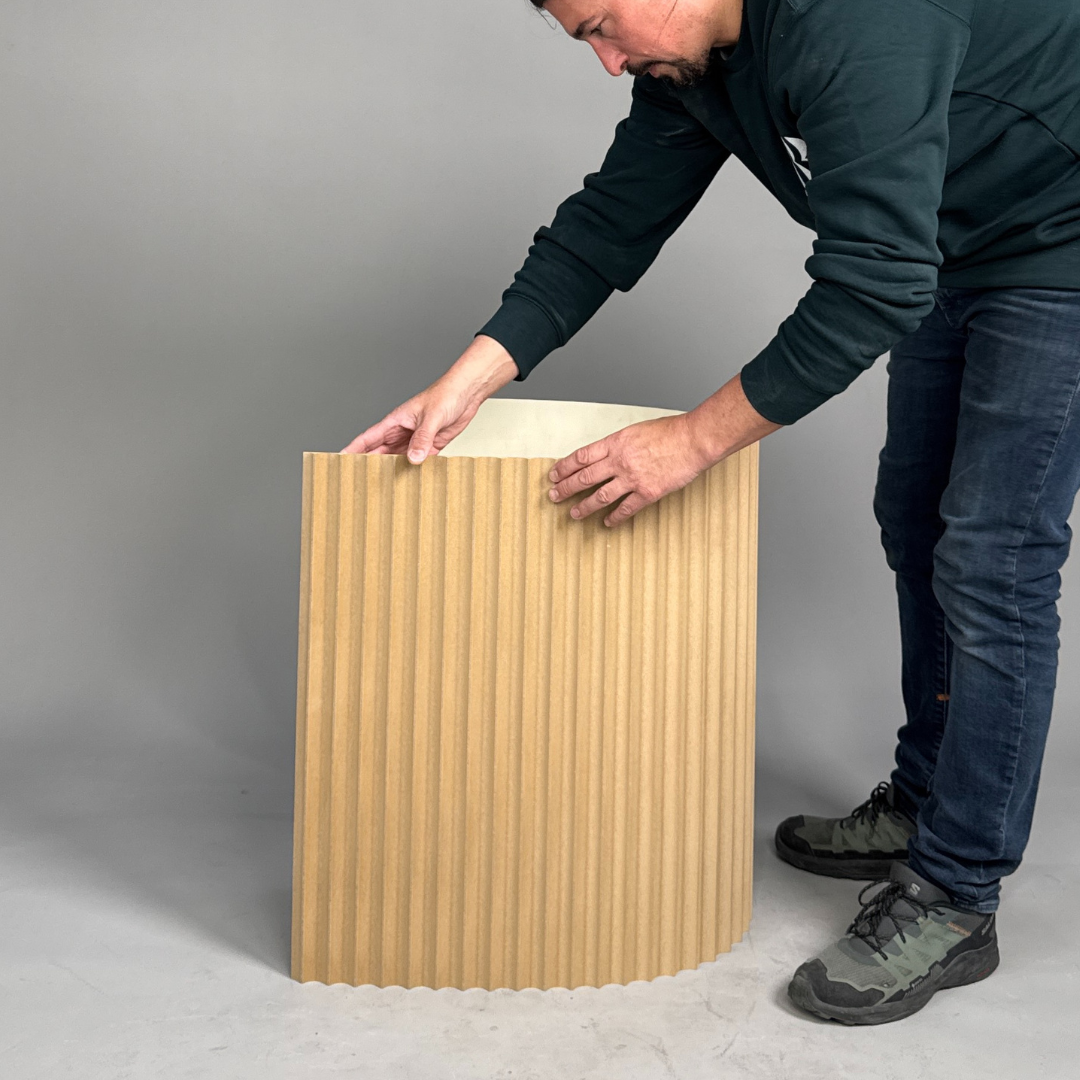
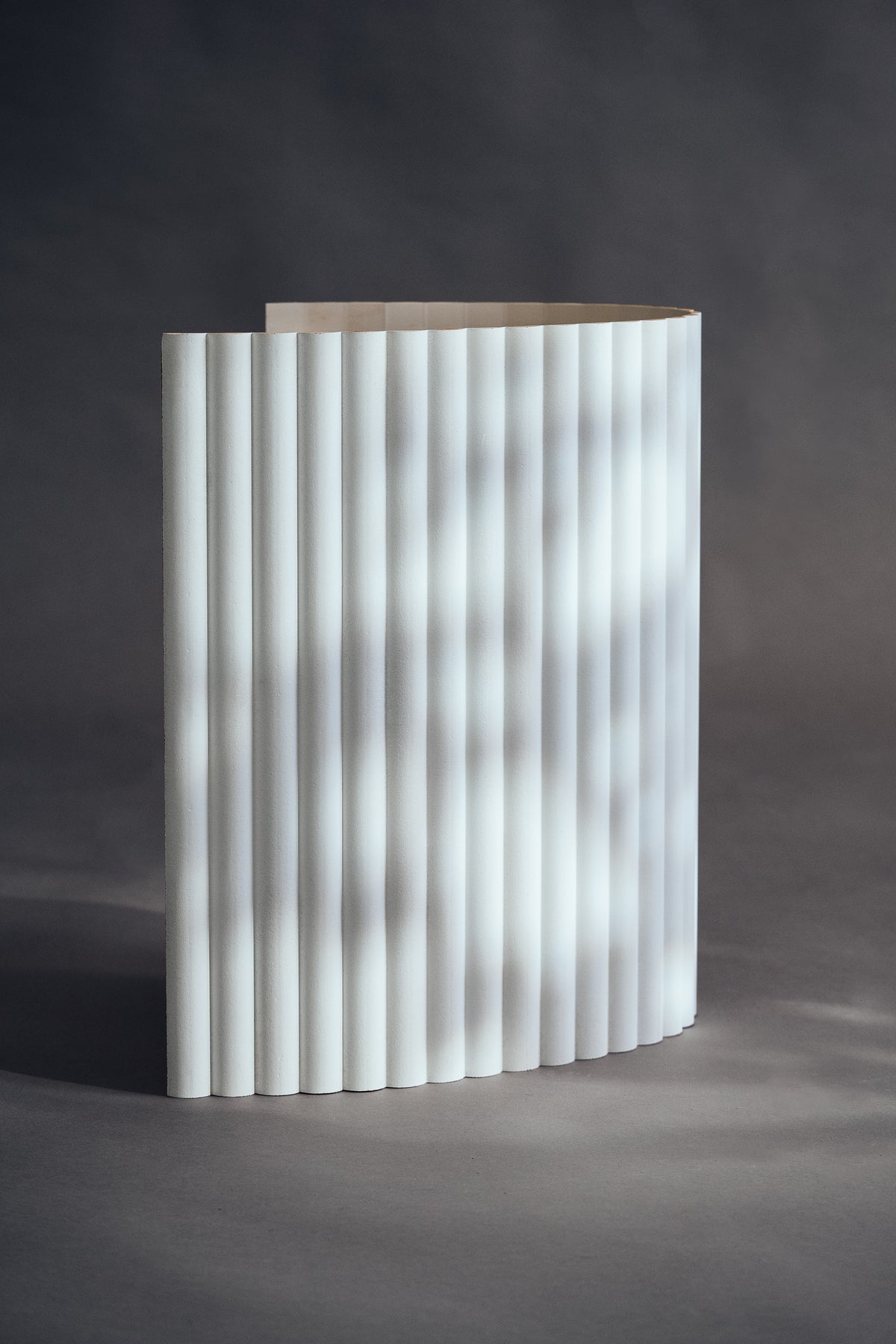
BendyWood Specification Checklist

Before issuing drawings or a specification, confirm the following.

Application

Wall, cabinetry, island, counter, reception desk or other.

Finished radius
Show the radius clearly in millimetres.

Curve direction

Identify concave or convex where relevant.

BendyWood profile

Nominate the exact profile.

Panel format

Select the most suitable panel size.

Panel direction

Confirm which way the profile runs.

Finish
Nominate raw MDF, primed, veneer and/or final coating.

Supporting Substrate

Define what supports and forms the curve.

Joint locations

Plan visible joins before fabrication.

Moisture exposure

Check if the environment is suitable.

Fire requirements

Confirm any required fire classification.

Sample approval

Approve profile and finish before you start.

Technical Guides

Panel size and orientation are worth checking before ordering, particularly on kitchen islands, reception desks, counters and full-height feature walls. The right format can reduce joins, improve material efficiency and give you more control over the finished result.

Start With the Radius
BENDING & FORMING

Start With the Radius

If there is one number to confirm early, it is the finished radius. The minimum bending radius depends on the exact BendyWood profile being specified, so do not assume one radius applies across the range. Confirming it before drawings or cabinetry are locked in is one of the simplest ways to avoid redesign later. Show the finished radius clearly in millimetres, then check it against the selected profile before fabrication begins.

Check Bending Radius Guide
Primed vs Raw MDF
MATERIAL SELECTION

Primed vs Raw MDF

Primed and raw panels suit different finishing workflows. The right choice depends on the finish you want, who will apply it and how much preparation should happen before the panel reaches site. Choose the material system before ordering rather than leaving the decision to the finishing stage.

Read The Guide
Common Curved Wall Design Mistakes
DESIGN & DETAILING

Common Curved Wall Design Mistakes

Most curved wall problems are predictable. Radius, substrate, panel format, orientation and join placement are all easier to resolve on the drawing than on site. This guide covers the decisions most often overlooked early in a curved project.

Read The Curved Wall Guide
MDF and Moisture Resistance
MOISTURE & MATERIALS

MDF and Moisture Resistance

Not every MDF product is designed for the same level of moisture exposure. Material selection should reflect the actual environment rather than relying on the word "MDF" alone, particularly around bathrooms, laundries, kitchens, bars and other moisture-prone spaces.

Read The Moisture Guide

Before You Specify a Curved Panel Follow this simple sequence to avoid most problems

1. Confirm the Finished Radius

Know how tight the curve needs to be. The finished radius will influence profile selection and several other design decisions.

2. Select Profile and Finish

Choose the profile and finish that suit the project, and check the bending limits of the selected profile.

3. Check Panel Format

Panel size and orientation affect coverage, profile direction and where joins fall.

4. Confirm the Substrate

The structure underneath establishes and supports the curve.

5. Check Requirements

Consider moisture exposure, fire requirements and any other project-specific performance criteria.

Technical Questions at a Glance

Most technical decisions come back to five things: material, radius, panel format, detailing and environment. Start with the question closest to your project, then use the full guide to work through the detail.

Technical QuestionKey QuestionWhat It Helps You DecideBest Time to Check
Primed vs Raw MDFHow will the panel be finished?Which material and finishing workflow best suits the projectBefore ordering
MDF Bending RadiusHow tight is the curve?Whether the selected profile can form the required radiusBefore drawings are finalised
Common Curved Wall MistakesHas the curve been properly detailed?The ideal panel format to help reduce joinsand plan for joins to be placed in less vsible sections.During design and documentation
MDF and MoistureHow much moisture will the panel face?Whether the selected MDF system is appropriate for the environmentBefore material specification
Panel Format & DirectionWhich way does the panel need to run?The best panel format Which panel size and orientation best control coverage, profile direction and join locationsBefore fabrication and ordering

Confirm the Technical Details Before You Build

Already have a radius, drawing or panel profile in mind? Send us your project details and we can help you check the panel selection before you order. Or order samples to compare profiles and finishes in person.

Get in Touch

Explore BendyWood by Project Stage

New to BendyWood?

Start with Meet Bendy Bois for an introduction to how BendyWood flexible panels work, including applications, profiles, finishes and panel formats.

Get the Material Overview?

When specifying, Curved MDF Panels Australia guide covers flexible MDF, materials, construction and installation in one broader guide.

Deciding Where to Use It?

Curved Architectural Applications covers kitchen islands, reception desks, hospitality fit-outs, feature walls and other curved applications.

Frequently Asked Questions

Start with the finished radius, selected profile, panel format and direction, substrate and finish. Also identify any project-specific moisture, fire or performance requirements before ordering.

Confirm the finished radius in millimetres and check it against the minimum radius of the exact BendyWood profile you want to use. Different profiles have different bending limits.

Ideally, the two should be considered together. If the architectural radius is already fixed, select a profile capable of forming it. If the design is still flexible, selecting the profile early gives the designer more control over the final curve.

It depends on the MDF product and the level of moisture exposure. Standard, moisture-resistant and wet-area materials should not be treated as interchangeable. Match the material to the actual environment.

Finalising the design before confirming how the radius, panel format and supporting structure work together. Those decisions are much easier to change during documentation than during fabrication.

PP-DEBUG: Current path: /pages/trade-commercial-specification